
October 2026
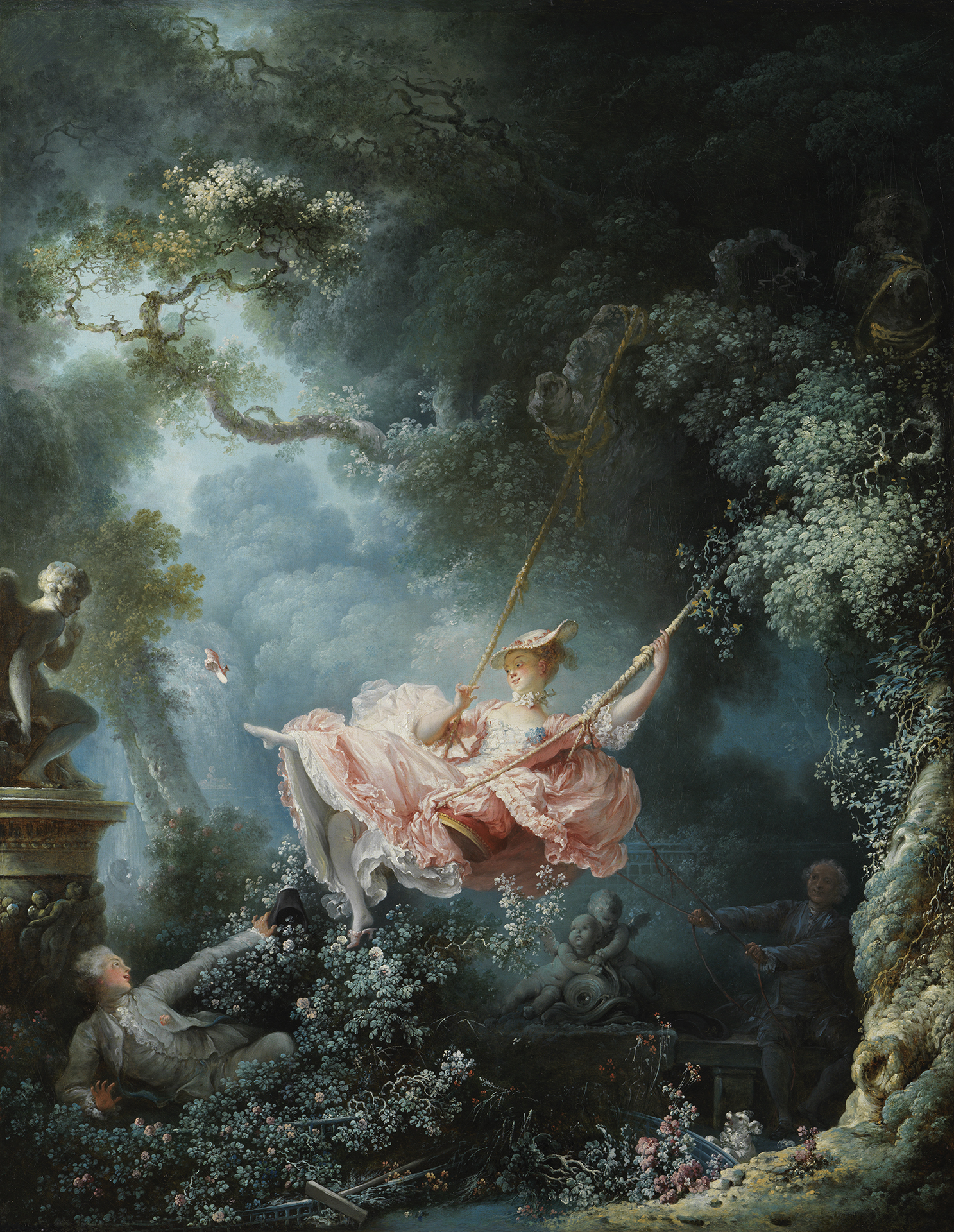
The Swing (1767) — Jean-Honoré Fragonard
- Artist
- Jean-Honoré Fragonard
- Year
- About 1767–68
- Medium
- Oil on canvas
- Collection
- The Wallace Collection, London
The commission came with instructions. A courtier went to the painter Gabriel François Doyen and asked for his mistress on a swing, pushed by a bishop, while he hid in the bushes to catch a glimpse up her skirt. Doyen found it too naughty and passed it along. Fragonard said yes.
But he didn't paint it quite the way he was told. The bishop is gone. In his place is an older man, a cuckolded husband or a servant, half lost in shadow on the right as he works the ropes. The lover stays where he asked to be, sprawled in the roses with his arm out and his hat raised.
And she floats above all of it, in a clearing of light, in a billowing, ruffled silk gown the color of the inside of a shell. She kicks her leg forward and her kitten-heeled slipper flies off toward a stone Cupid, who holds a finger to his lips. By eighteenth-century French standards it was a provocation. The view below is the one she chose to give him.
The slipper is the only thing in the painting that isn't being held, pushed, or watched.
Everyone in this garden has a part to play. The husband keeps things moving. The lover looks. The statues keep the secret. She's the only one who seems to be enjoying herself.
That's what we keep coming back to. The painting was made for someone else's eyes, but the pleasure in it belongs to her: the rush of air, the silk catching wind, the moment of letting something fall.
Monteiga is made for the hours when no one is in the bushes. No audience, no one pulling the ropes. Just you, the softness of the fabric, and the swing of the evening, given back to you.
For the moments no one is watching.